
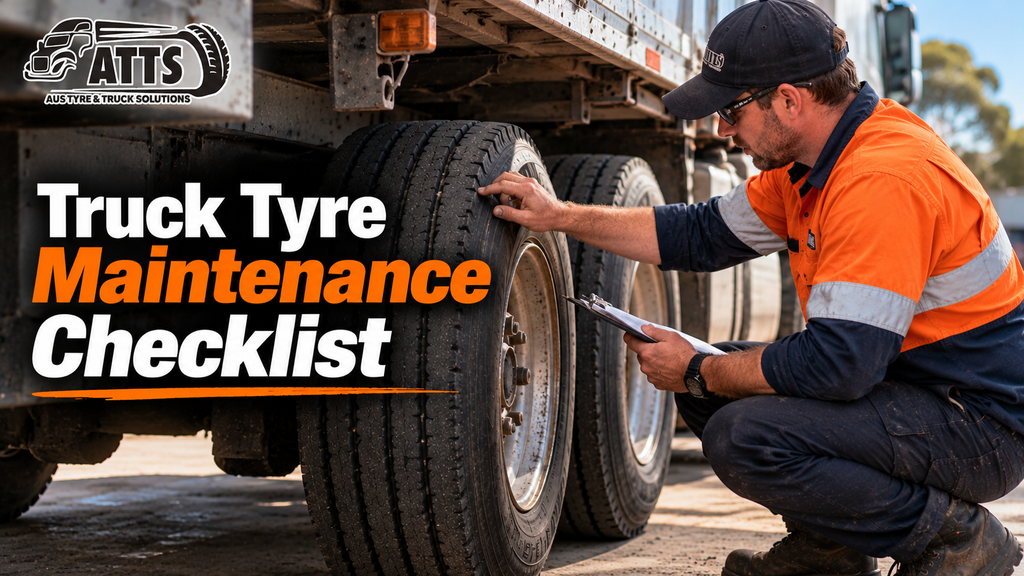
A useful truck tyre inspection checklist covers five things. Tyre pressure, tread, tyre condition, wheel security and any change in vehicle behaviour.
The mistake is treating tyre maintenance as something that only happens when a tyre looks worn. Instead, build it into three levels:
Daily → spot immediate defects before the vehicle leaves
Weekly → measure developing wear and pressure issues
Monthly → review alignment, condition, age and tyre performance
This approach aligns with the broader heavy vehicle maintenance principle of having documented daily checks, fault reporting and timely repairs.
Daily Truck Tyre Checks: What Drivers Should Inspect Before Every Shift
The daily check should be quick, practical and completed before departure. A driver does not need to diagnose every fault. They do need to identify anything that should stop the vehicle from leaving.
Check Tyre Pressure and Obvious Pressure Loss
Check pressures using an appropriate gauge and follow the pressure specified for the tyre, axle load and vehicle application. Do not use a visual inspection as a substitute for an actual pressure reading. A tyre can be seriously underinflated before it looks flat.
Pressure should normally be checked when the tyre is cold because driving increases tyre temperature and pressure readings.
Inspect the Tread and Sidewalls
Walk around the truck and trailer and look closely at every accessible tyre.
Look for:
- Cuts and cracks
• Bulges or impact damage
• Exposed cords
• Embedded objects
• Missing chunks of rubber
• Unusual tread wear
Sidewalls deserve particular attention because structural damage can become much more serious when a tyre is carrying a heavy load.
Check Tread Wear Indicators
Look at the tread wear indicators inside the principal grooves.
Australian heavy vehicle inspection criteria require at least 1.5 mm of tread depth in the principal groove, measured in a continuous band around the tyre and extending across at least 75% of its width.
The legal minimum is not the same thing as a sensible replacement target. Fleet operators should monitor wear trends and replace tyres before they become unsafe or unsuitable for the job.
Check Wheel Nuts, Studs and Rims
Tyre maintenance includes the wheel assembly.
Check for missing or visibly loose wheel nuts, damaged studs and obvious rim problems. Rust marks around wheel studs can also be a useful warning sign of movement.
Check Valves and Caps
Inspect valve stems, extensions and caps for damage or signs of leakage.
A small valve problem can become a slow pressure loss that gets missed during a busy shift.
Record Driver-Reported Problems
A driver reporting steering vibration, pulling, repeated low pressure, or a new noise is providing useful maintenance information.
Record it.
A recurring tyre complaint should be investigated rather than simply reset between trips.
The daily check is not about finding everything. It is about making sure obvious defects do not leave the yard unnoticed.
Weekly Heavy Vehicle Tyre Maintenance: Measure, Compare and Investigate
A weekly inspection should go beyond what can be seen from a quick walk around.
This is where heavy vehicle tyre maintenance becomes more measurable.
Measure Tread Depth
Use a proper tread depth gauge and record readings across the relevant tyre positions.
Check more than one point across the tread. Differences between the inner, centre and outer areas can reveal developing wear that a quick visual inspection can miss.
Check Every Tyre Pressure, Including Inner Duals
Check the complete set, including trailer tyres and inner duals.
Inner dual tyres are easy to overlook simply because they are harder to access. That makes them a common blind spot in a truck tyre inspection checklist.
Record the readings so you can identify repeat pressure loss rather than relying on memory.
Check Dual Tyre Matching
Dual tyres need to work as a pair.
Differences in pressure, diameter or wear can affect load sharing and accelerate wear. During your inspection, compare the paired tyres rather than checking each tyre in isolation.
Look for:
Different tread depth → possible uneven loading or wear
Different pressure → possible leak or maintenance issue
Different diameter → possible mismatched tyre pairing
A mismatch that is ignored today can become a bigger tyre and casing problem later.
Look for Early Wear Patterns
Run your inspection over the tread and look for feathering, diagonal wear, heel and toe wear, cupping or scalloping.
These patterns can point towards inflation, alignment, suspension or wheel-related problems. Michelin’s commercial tyre guidance also identifies mismatched duals, alignment issues and worn suspension components as potential contributors to abnormal wear patterns.
Monthly Fleet Tyre Maintenance: Check What the Weekly Inspection Cannot
Monthly checks should focus on the causes behind repeated wear and the longer-term condition of your tyres.
Review Wheel Alignment
Wheel alignment problems can gradually destroy otherwise usable tread.
One-sided wear, feathering or repeated shoulder wear should prompt an alignment and mechanical inspection rather than another tyre replacement alone.
For fleets, alignment is especially important because a small issue repeated over thousands of kilometres can create a significant tyre cost.
Review Tyre Rotation Requirements
There is no single rotation interval that suits every truck.
Rotation should be based on tyre manufacturer guidance, axle position, vehicle application, load, duty cycle and actual wear patterns.
That is more useful than applying a passenger car interval to a heavy vehicle fleet.
Inspect Spare Tyres
Your spare should not be the tyre you discover is unusable during a breakdown.
Check its pressure, tread, sidewalls, valve condition and mounting equipment. Include trailer spares in the same review.
Check Tyre Age and Condition
Look at the tyre’s manufacture information and inspect older tyres for cracking, deterioration and other signs of ageing.
Age should be considered alongside tread depth, operating conditions, tyre history and physical condition. A tyre with plenty of tread is not automatically a tyre that should remain in service indefinitely.
Review Tyre Pressure and Temperature Data
Where a fleet uses TPMS or telematics, review trends rather than looking only for an individual warning.
A gradual pressure drop can reveal a developing leak. Repeated temperature spikes can also justify further investigation.
That turns tyre monitoring into a maintenance tool rather than simply another dashboard alert.
Truck Tyre Tear Patterns: What is Your Tyre Trying to Tell You?
The tread can reveal what is happening elsewhere on the vehicle.
| Wear pattern | What you may notice | What to investigate |
| Centre wear | Centre tread wears faster | Inflation pressure and load |
| Shoulder wear | Both shoulders wear faster | Inflation, loading and operating conditions |
| One-sided wear | One side of the tread wears faster | Alignment, suspension or axle geometry |
| Cupping or scalloping | Wavy or uneven tread dips | Suspension, balance or wheel components |
| Diagonal or irregular wear | Angled or repeating tread wear | Alignment, dual matching and mechanical condition |
These patterns should be treated as clues, not automatic diagnoses. The same wear pattern can have more than one contributing cause.
What Causes Truck Tyre Breakdowns?
Most preventable tyre failures come back to a small number of maintenance problems.
- Underinflation increases tyre flexing and heat generation, which can accelerate deterioration and increase failure risk.
- Overloading places additional stress on the tyre and must be managed against the vehicle, axle and tyre ratings.
- Uneven wear can reduce usable tyre life and often points to an underlying mechanical or inflation problem.
- Physical damage from kerbs, potholes, debris or impacts can compromise the tyre even when tread depth still looks acceptable.
- Mismatched dual tyres can interfere with proper load sharing and create unnecessary wear.
- Delayed repairs give small defects more time to become expensive failures.
The NHVR’s current inspection framework specifically treats tyre condition, tread and wheel components as part of heavy vehicle inspection requirements.
For WA operators, the principle is straightforward: inspect, record, act and keep unsafe vehicles out of service until defects are addressed.
Need help managing your fleet tyres? Talk to ATTS Group
At ATTS Group, we work with heavy vehicle operators in Perth to supply and fit truck tyres and support ongoing fleet tyre maintenance.
When tyre costs, downtime and vehicle availability all matter, having the right checks in place can make a noticeable difference.
Ready to review your fleet’s tyre maintenance? Contact ATTS Group and speak with our team about your truck and trailer tyre requirements.
FAQs
Can I drive a truck with a slow tyre leak?
A slow leak needs investigation because continued driving can cause further tyre damage. Do not treat repeated pressure loss as normal.
How do you check the inner tyre on a dual wheel?
Use an appropriate heavy vehicle pressure gauge and inspect the inner tyre carefully. Restricted access makes dedicated dual tyre checking important.
Does hot weather affect truck tyre pressure?
Yes. Tyre pressure rises as the tyre heats during operation, which is why cold pressure readings should be used when setting inflation.
How long do commercial truck tyres last?
There is no fixed lifespan. Service life depends on load, distance, road conditions, inflation, maintenance, tyre position and casing condition.
Can every punctured truck tyre be repaired?
No. Repairability depends on the location, size and condition of the damage. A qualified tyre professional should assess the casing before repair or reuse.